
Witnessing Instead of Holding
Breaking Over-Functioning, Parent Anxiety and Intergenerational Nervous System Patterns
Written by Dr. Donna Gilman
Many parents—particularly highly empathic parents raising children or young adults with ADHD, anxiety, executive functioning challenges, or emotional struggles—find themselves carrying far more than their own emotional load. They worry, anticipate, over-function and become absorbed in trying to keep their loved ones on track.
In therapy, we often see patterns of over-functioning, emotional enmeshment and difficulty with differentiation. Differentiation is the ability to remain connected to those we love without becoming consumed by their experience. For many parents, especially those with histories of parentification or early responsibility, this can be incredibly difficult.
Learning to witness instead of hold becomes a powerful nervous system practice.
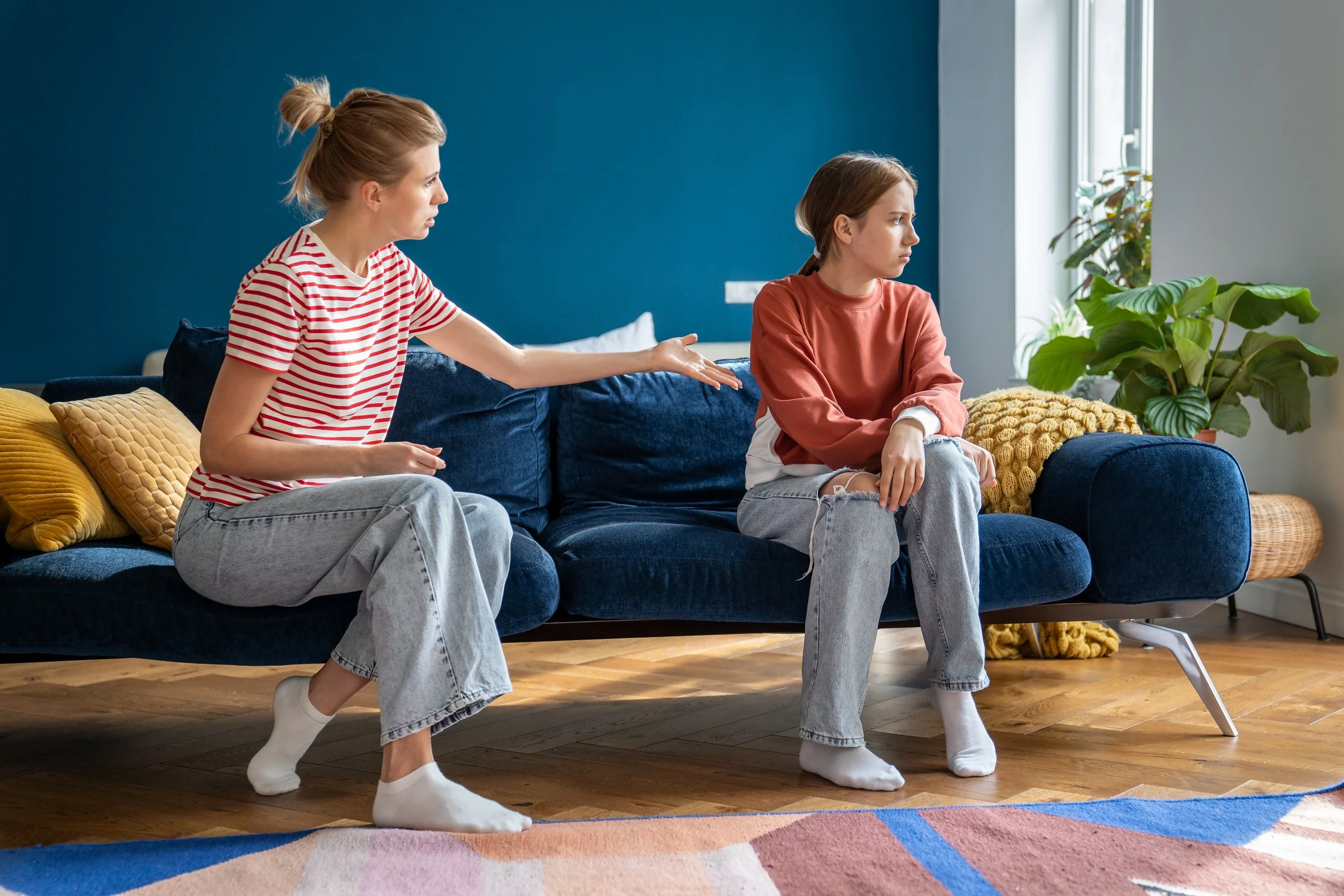
Sarah is a 48-year-old single mother to a fabulous "twice exceptional" 18-year-old daughter, Rachel, who struggles with executive functioning challenges, anxiety and ADHD. Sarah has spent years pouring everything she has into helping Rachel stay organized, connected and supported.
She has done all of this while working more than full-time as a pediatric nurse, largely without family support. Sarah herself struggles with migraines, Celiac disease and increasing health concerns that recently prompted further medical testing.
As Rachel has entered young adulthood, she has naturally begun pulling toward greater independence. At the same time, she has become increasingly resistant to Sarah's attempts to organize and manage her life.
Sarah shared:
"I know it's developmentally appropriate for Rachel to want to run her own life, but she keeps dropping balls and then internalizes everything as failure. It's the same pattern that's always been there. But now I can't protect her from it in the ways I used to. She won't let me. And honestly? I'm exhausted all the time. I can barely get through the day."
Sarah understands her patterns well. She knows where her tendency to over-function comes from.
As the daughter of a mother with significant mood struggles, Sarah was parentified early in life. She became responsible for siblings, cooking, cleaning and emotional caretaking. Hypervigilance wasn't something she chose—it became wired into her nervous system.
After years of therapy, Sarah has insight into her patterns. But insight alone doesn't always create change.
Sarah also describes herself as a frustrated poet. She longs to create space for writing and creativity but struggles to regulate her own nervous system long enough to access those parts of herself.
Recently, after a particularly challenging morning with Rachel, Sarah reflected on an experience that felt very different:
"I was really tested today."
Rachel had a final project due for her first community college class. She had met with a tutor but still needed to finish editing her essay before submission.
Sarah continued:
"As an empath, I can easily pick up on the energy of people around me. Last night I could literally feel Rachel procrastinating. It felt heavy—like wading through pea soup. I could feel dread, avoidance, despair and a stubborn refusal to deal with reality."
"Inside of me I noticed a tightening in my chest and clenching in my stomach. I felt a powerful urge to step in and help, even though I knew Rachel would reject it."
"Instead, I counseled myself not to say anything because I am practicing separating my energy from hers and allowing natural consequences."
Sarah's therapy work has recently centered around differentiation and nervous system regulation.
"Several times I put my hand over my heart and said, 'This is my body. This is my energy. Everything else returns to where it belongs.'"
"I actually got to sleep, which is remarkable for me."
But at four o'clock in the morning she awoke suddenly, senses alert.
"This is my body's way of telling me danger is coming."
Of course, the danger wasn't actually Rachel forgetting an assignment.
The danger was loss of control.
The danger was the old nervous system story:
If I don't monitor everything, something bad will happen.
Sarah understood intellectually that her anxiety wasn't entirely about her daughter. It was also about decades of hypervigilance woven into her nervous system.
That night she had a dream.
In the dream she purchased a tiger and placed it in a cage because she was afraid of it. The cage was too small and she felt terrible seeing the tiger cramped and constrained, but she was too afraid to let it out.
Upon waking, Sarah looked up possible symbolism and interpreted the tiger as pent-up creative energy—parts of herself that had been constrained and neglected.
And suddenly it became clear.
This was not simply about Rachel.
This was also about Sarah.
Her own life had become crowded out by crisis management.
Her own creativity had been caged.
Her own nervous system had become organized around vigilance and protection.
The next morning Rachel was highly activated and agitated.
Sarah centered herself.
She breathed.
She reminded herself:
"She is on her own journey."
Still unable to resist completely, Sarah asked:
"Is your essay done?"
"No," Rachel replied defensively, kicking at the rug.
Sarah immediately felt shame and frustration radiating from her daughter.
Internally she returned to her practice:

"This is my body. This is my energy. This is my breath. I release any energy that is not my own. I take back any energy I have placed into her. I am not here to fix, solve or save. I am a witness. I am a mentor."
Rachel raised her voice and threw her backpack onto the floor.
Sarah stayed calm.
"I am pressing pause on this conversation."
She walked away.
She regulated.
Hand over heart:
"This is my body. This is my energy."
After returning, Rachel announced:
"There's no point in me even going to class today."
Sarah calmly replied:
"I think you should go."
Rachel escalated again.
Sarah walked away.
She regulated.
Again:
"This is my body. This is my energy."
Later Sarah returned and said:
"This is your life. Your choices and your consequences. But in life we often have two options: we can show up and face the music when things haven't gone well, or we can curl up and hide."
More grumbling.
More frustration.
Then Rachel quietly got dressed and left for school.
The drive was silent.
Sarah could feel her daughter's disappointment and shame.
When she dropped her off, she simply said:
"I'm proud of you for showing up for your life."
Later, reflecting on the morning, Sarah recognized something profound:
"I can imagine the old version of me spending my day in hypervigilance, waiting for the next shoe to drop."
"Normally I wouldn't focus. I might skip meals, forget to hydrate, sit on the edge of my seat and feel anxiety flooding my body. But I consciously chose not to do those things."
Sarah is learning to interrupt an intergenerational pattern of over-functioning, over-giving and protecting others.
The truth is that in trying to protect her daughter from consequences, she was also protecting herself—from her own discomfort, distress and fear.
Allowing natural consequences was not simply about Rachel.
It was also about Sarah building greater distress tolerance.
Learning to witness instead of hold.
To observe instead of absorb.
To remain connected without disappearing into someone else's struggle.
The challenge for Sarah now is not simply to care for her daughter.
She already knows how to do that.
The challenge is learning to care for herself with equal devotion.
Because loving someone does not require abandoning yourself.
Sometimes healing begins when we place a hand over our heart and remember:
This is my body.
This is my energy.
This is my life.

Clinical psychologist and co-director specializing in couples therapy with a focus on trauma-informed treatment, sex therapy, and LGBTQ issues. With extensive experience since 1995, she integrates various therapeutic models, including EFT, Gottman, and narrative therapy, alongside mindfulness and clinical hypnosis. Dr. Gilman offers transformative retreats and relationship intensives, helping couples enhance emotional and sexual intimacy by addressing deep-seated issues and fostering greater connection and resilience.